Myths
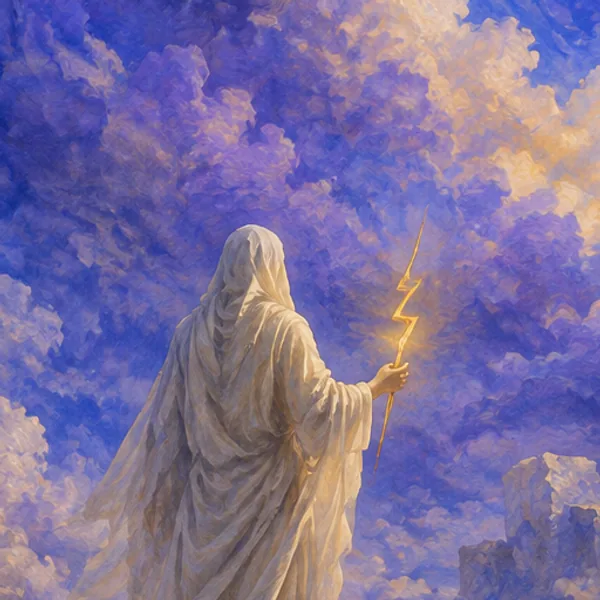
Zeus and the Thunderbolt: Reading a Mythological Symbol
How a weather image becomes an attribute, a narrative action and a clue—without turning every flash into the same story.
Read the StoryMythology, architecture and visual culture
Discover Greek myths, the architecture of ancient sanctuaries and the ways artists continue to reinterpret the classical world.
Mythological plots, characters and the different versions preserved in ancient sources.
02TemplesSanctuary planning, columns, building materials and architectural details.
03ArtSculpture, painting, illustration and contemporary reinterpretations of the classical world.
Featured stories
Begin with a symbol, a plan or an image. Every story distinguishes source evidence from modern interpretation.
How a weather image becomes an attribute, a narrative action and a clue—without turning every flash into the same story.
Read the StoryA plan is a sequence of thresholds: platform, porch, inner room and, in many examples, a surrounding colonnade.
Read the StoryRecognise the orders through relationships among column, capital and entablature—not through ornament alone.
Read the StoryA practical way to compare tellings without forcing them into a single seamless plot.
Read the StoryCloud, height, radiance and architecture turn a named mountain into a visual idea—often far beyond the ancient evidence.
Read the StoryBorrowed columns can establish scale and memory, but convincing fantasy depends on understanding what has been changed.
Read the StoryArchitecture at a glance
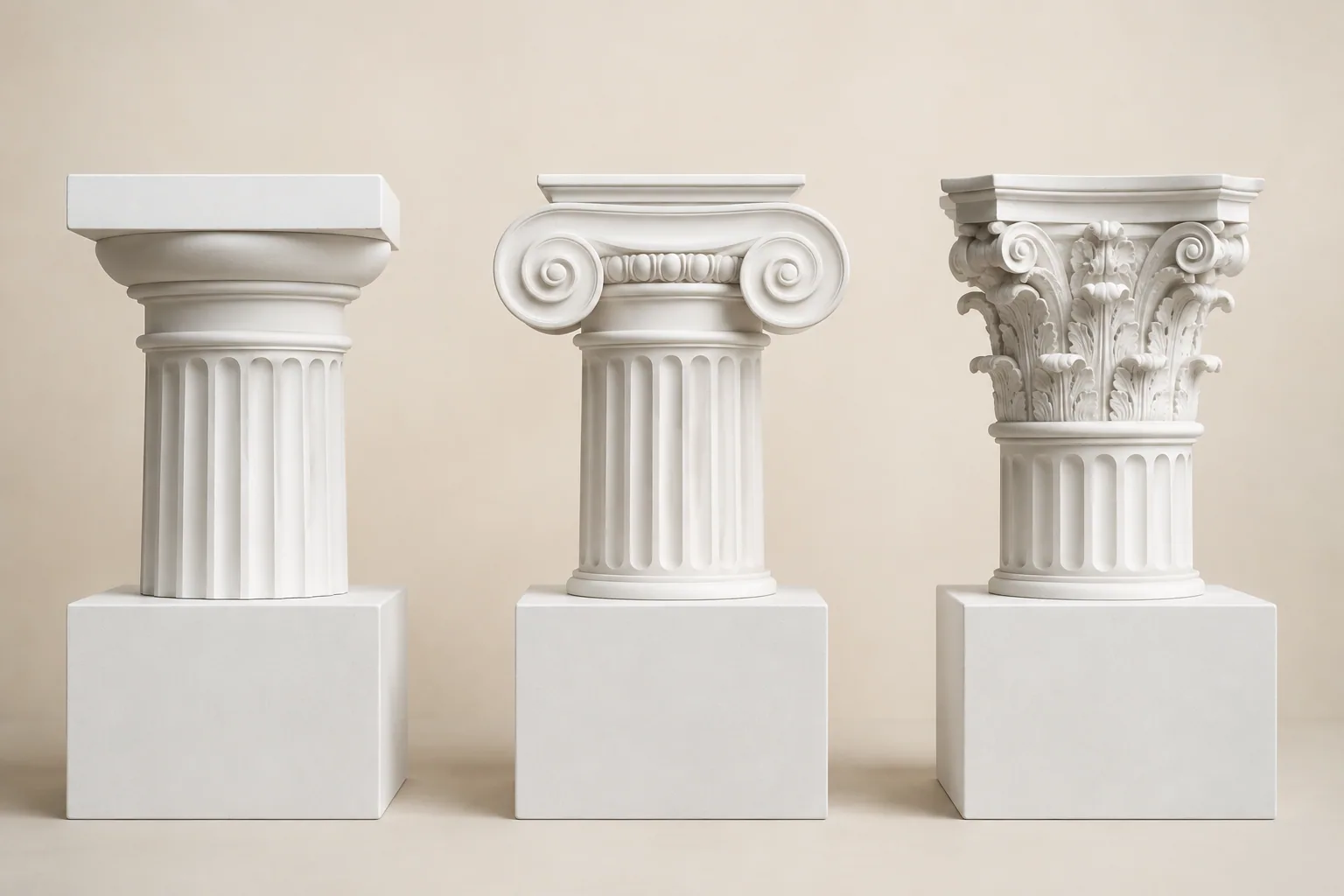
| Order | Recognizable Features | Illustrated Example | Further Reading |
|---|---|---|---|
| Doric | Fluted shaft without a separate base; cushion-like echinus, flat abacus; triglyph-and-metope frieze. | 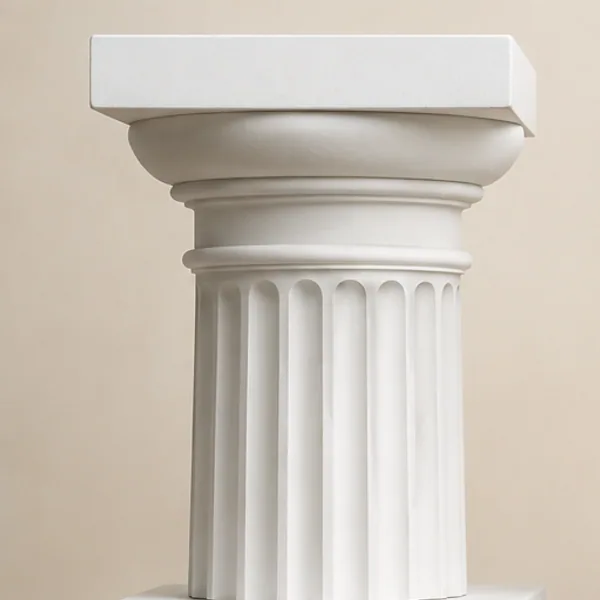 Digital study; not a cast of a specific object. Digital study; not a cast of a specific object. | Visual introduction The Met overview |
| Ionic | Column base; paired scroll-like volutes; horizontal architrave bands and often a continuous sculpted frieze. | 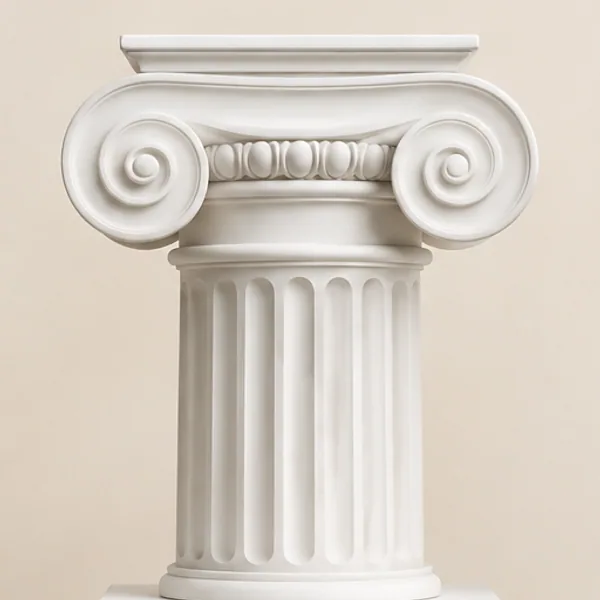 Digital study; not a cast of a specific object. Digital study; not a cast of a specific object. | Visual introduction The Met overview |
| Corinthian | Bell-shaped capital enriched with acanthus leaves, spirals, palmettes and small corner volutes. | 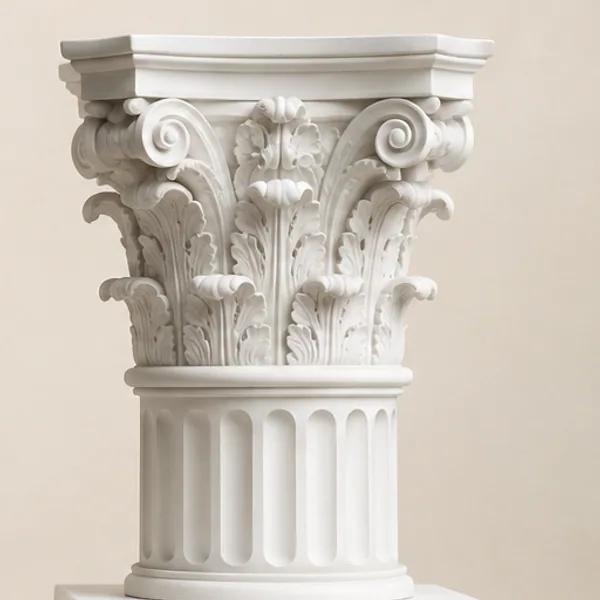 Digital study; not a cast of a specific object. Digital study; not a cast of a specific object. | Visual introduction The Met overview |
This is a recognition guide, not a ranking or a replacement for an architectural record. Descriptions follow The Metropolitan Museum of Art; illustrations are original simplified studies.
Reading an image
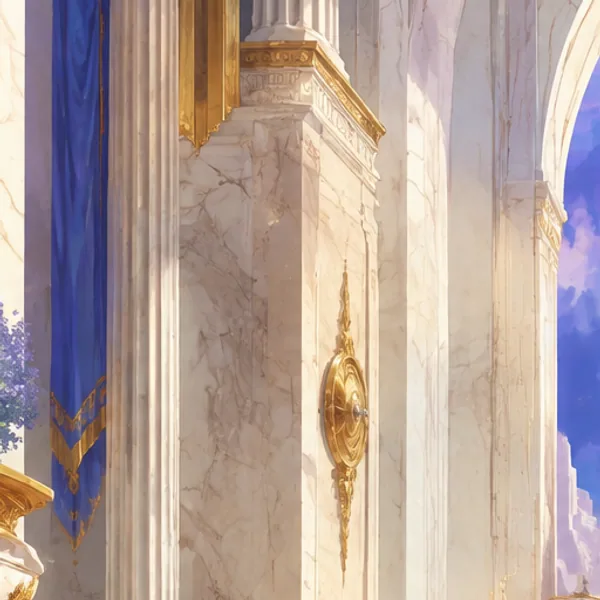
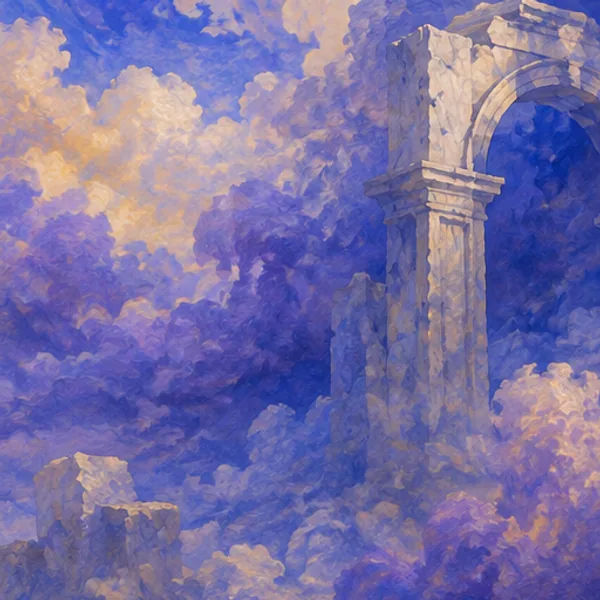
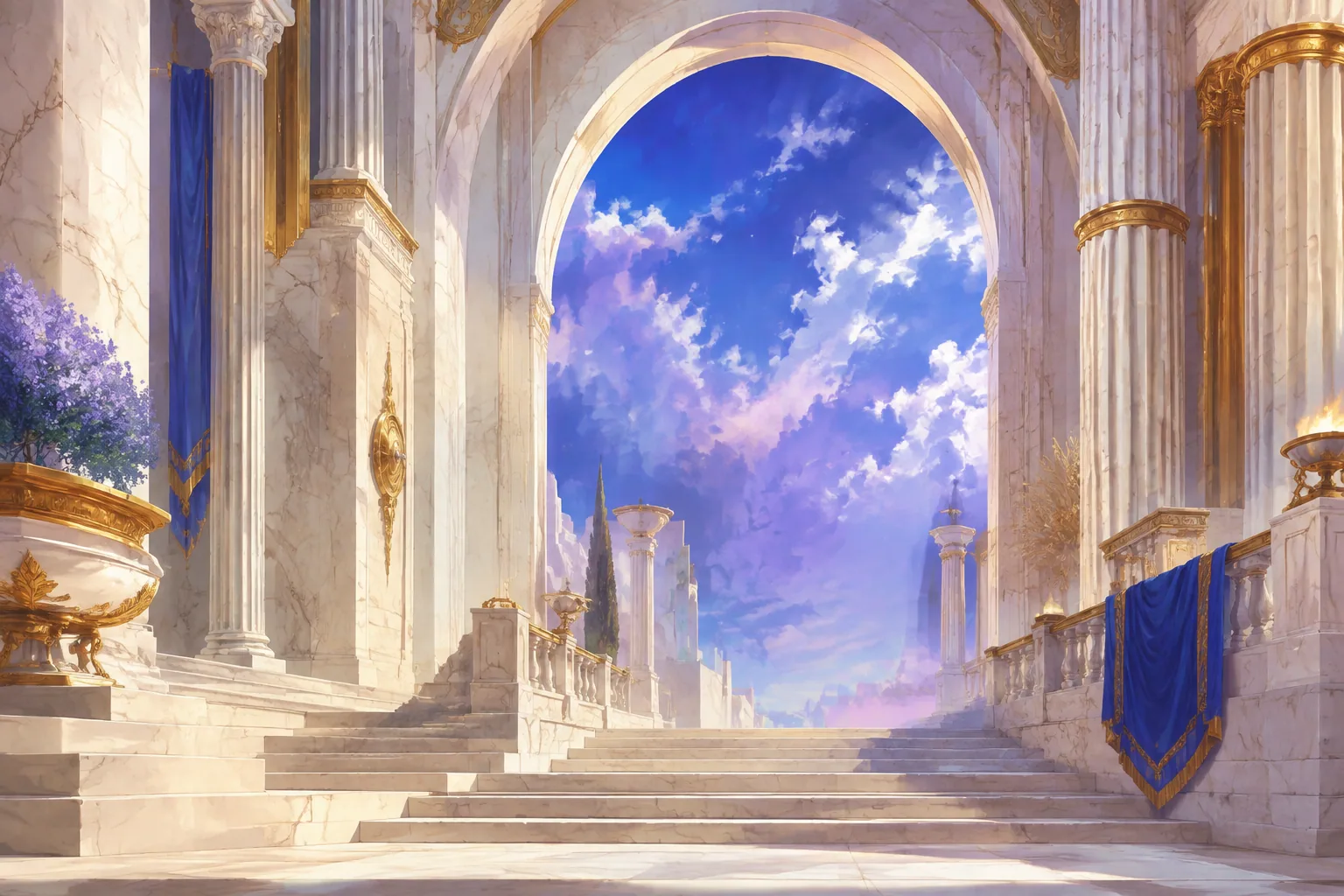
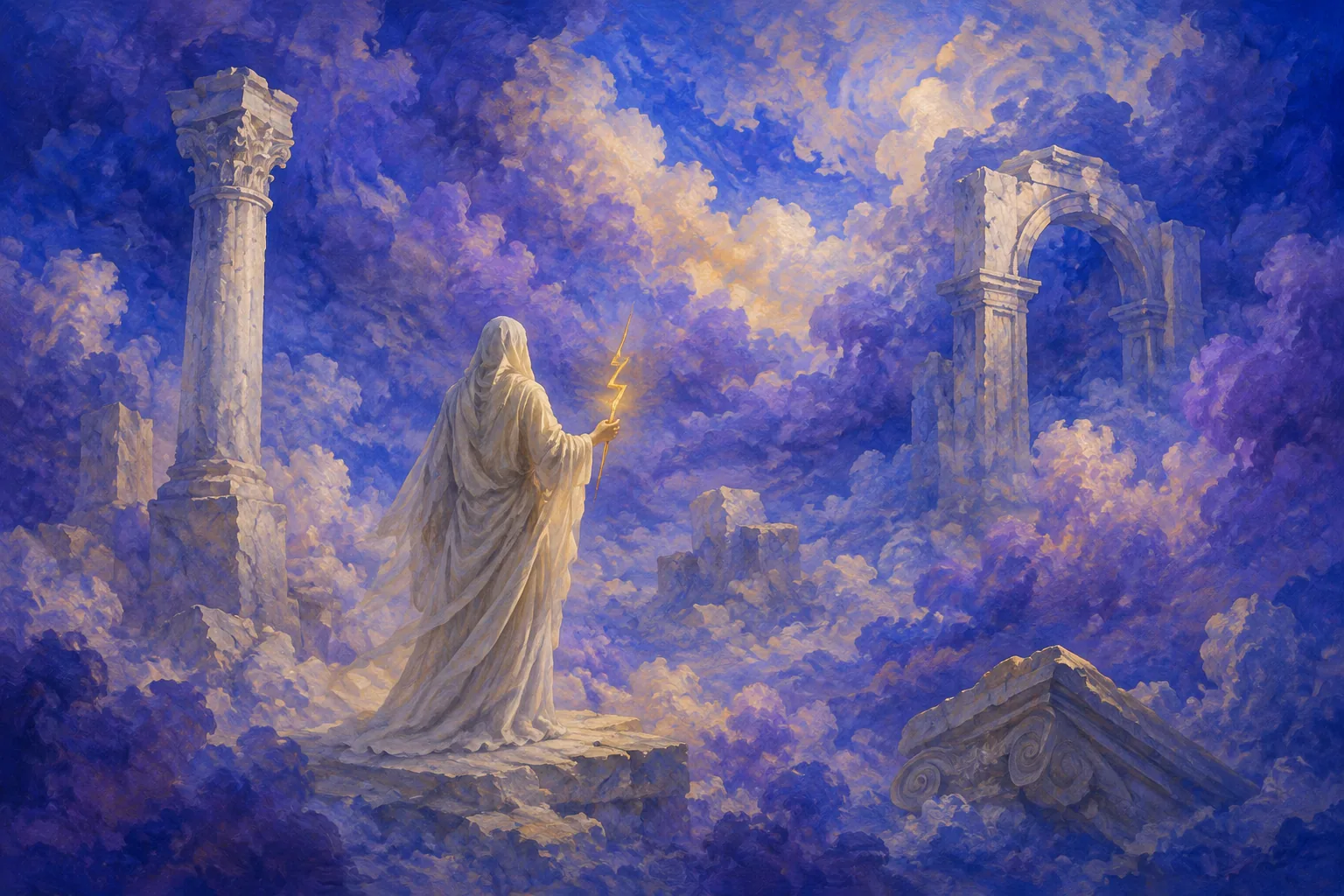
This original fantasy illustration borrows a classical vocabulary without reproducing a real site. The notes identify what can be compared with documented architecture—and what belongs entirely to the artist.
Documented cue
Fluting and capital-like forms evoke architectural orders, but their proportions do not copy a measured building.
Documented material, invented scale
Stone platforms and steps belong to ancient architecture; this palatial flight is a modern compositional device.
Modern invention
Gold bands organise the scene. No ancient symbolic meaning is claimed for their exact geometry.
Interpretive character
Drapery and lightning invite association with myth. The anonymous figure is not a reconstruction of an ancient statue.
Modern atmosphere
Radiance separates the figure and arch from the clouds; it is painterly storytelling, not evidence for a ritual.
Editorial palette
Cobalt and violet give the image a contemporary identity rather than a documentary surface.
Explicit invention
The huge round arch, floating fragments and cloud-built landscape have no claimed archaeological source.
How we research
A mythological episode is attributed to its text or tradition; an archaeological statement needs evidence of another kind.
When tellings differ, we identify the source instead of smoothing every account into one modern plot.
Reconstructions, museum objects and contemporary illustrations are labelled as different kinds of evidence.
Source scope is recorded with each article, and substantive changes belong in the edition record.
About the journal
Olympus Journal is an independent educational draft for readers who want to tell a source, a structure and an interpretation apart.
Scope, authorship and responsibilityThe journal explains Greek myth, ancient sanctuary architecture and the reuse of classical imagery in art. It is an educational reading project, not an archaeological database or a reconstruction service.
No. The main images in this edition are original AI-generated editorial illustrations. They are labelled as modern fantasy or educational studies and should not be used as evidence for the appearance of an ancient site or object.
Greek stories circulated through different genres, places and periods. Ancient poets and later mythographers could organise the same characters and events differently. Our articles name the source of a version instead of combining every account into one supposedly definitive narrative.
Each article ends with an annotated source list explaining what each reference supports. The Sources & Image Credits page also collects the full register and the scope of the original illustrations.
Visibility on the website does not grant a reuse licence. Review Sources & Image Credits and obtain permission from the verified publisher. External source material remains subject to its own terms.
The Contact page will show a working email after the owner supplies and verifies it. Until then, the placeholder is intentionally visible and no monitored inbox or submission form is claimed.